
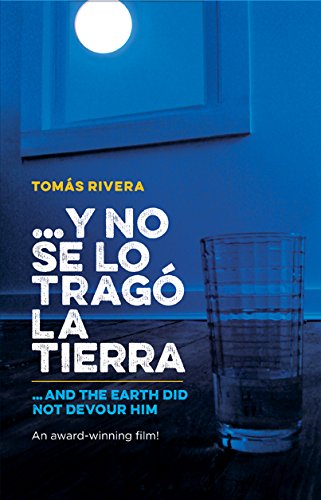
Y no se nos trago la tierra
Material type: TextLanguage: Spanish Publisher: Houston-Texas, Estados Unidos : Arte Público Press, 1995Edition: 3a. edDescription: 145 páginas; ImpresoContent type:
 - texto
- no mediado
- volumen
- 978-1-558-85815-2
- And the earth did not devour him
- 868.9921 R6213
| Item type | Current library | Shelving location | Call number | Status | Barcode | |
|---|---|---|---|---|---|---|
| Libro | Biblioteca Hernán Malo González | Biblioteca Central Bloque B | 868.9921 R6213 BG19918 (Browse shelf(Opens below)) | Available | BG19918 |
El año perdido. ´Lo que nunca supo...´. Los niños no se aguantaron. ´Se había dormido...´. Un rezo. ´-Comadre, ¿ustedes piensan ir para Iuta?´. Es que duele. ´-¿Para qué van tanto a la escuela?´. La mano en la bolsa. ´Faltaba una hora...´. La noche estaba plateada. ´Una tarde el ministro...´. ...y no se lo tragó la tierra. ´El abuelo quedó paralizado...´. Primera comunión. ´La profesora se asombro...´. Los quemaditos. ´Fue un día muy bonito...´. La noche que se apagaron las luces. ´Poquito antes de las seis..´. La Noche Buena. ´Antes de que la gente se fuera...´. El retrato. ´-Ya soltaron a Figueroa´. Cuando lleguemos. ´Bartolo pasaba por el pueblo...´. Debajo de la casa.
“I tell you, God could care less about the poor. Tell me, why must we live here like this? What have we done to deserve this? You’re so good and yet you suffer so much,” a young boy tells his mother in Tomás Rivera’s classic novel about the migrant worker experience. Outside the chicken coop that is their home, his father wails in pain from the unbearable cramps brought on by sunstroke after working in the hot fields. The young boy can’t understand his parents’ faith in a god that would impose such horrible suffering, poverty and injustice on innocent people.Adapted into the award-winning film …and the earth did not swallow him and recipient of the first award for Chicano literature, the Premio Quinto Sol, in 1970, Rivera’s masterpiece recounts the experiences of a Mexican-American community through the eyes of a young boy. Forced to leave their home in search of work, the migrants are exploited by farmers, shopkeepers, even other Mexican Americans, and the boy must forge his identity in the face of exploitation, death and disease, constant moving and conflicts with school officials.In this new edition of a powerful novel comprised of short vignettes, Rivera writes hauntingly about alienation, love and betrayal, man and nature, death and resurrection and the search for community.
There are no comments on this title.